
A proven framework that enables you to grow high performing teams.
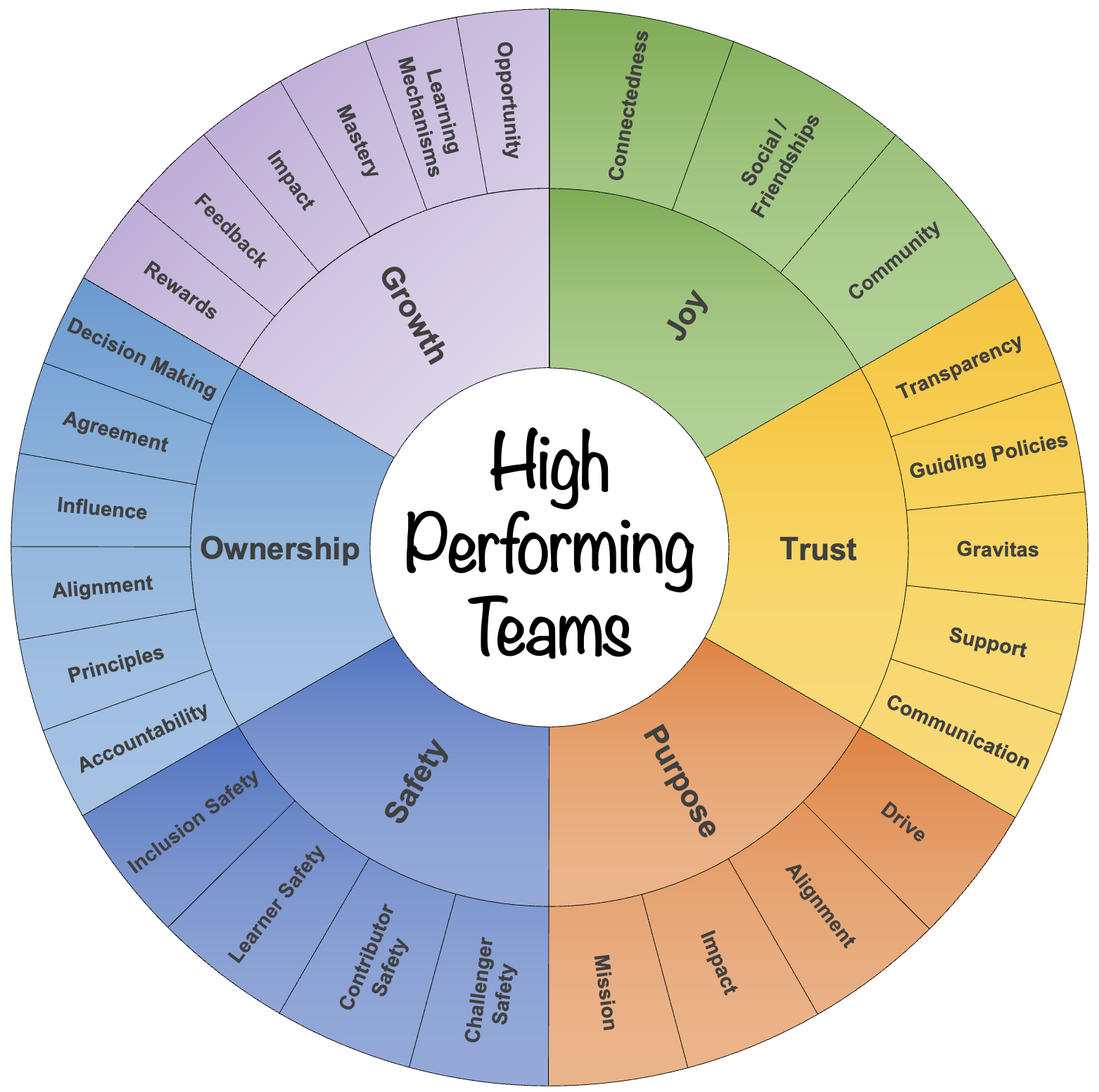
We’ve developed a framework to help teams unlock their full potential by balancing purpose, trust, safety, ownership, growth, and joy.
It brings clarity to the conditions that drive collaboration, resilience, and lasting impact.
01.
Joy
High‑performing teams thrive on a sense of connection and belonging. Joy comes from shared experiences, strong relationships, togetherness, and the feeling of being part of a community.
02.
Trust
Trust is built through transparency, clear guiding principles, and consistent support. It creates the confidence for open communication and the gravitas to navigate challenges together.
03.
Purpose
Purpose aligns individual drive with collective mission. It ensures that effort translates into meaningful impact and that everyone sees how their work contributes to a bigger story.
04.
Safety
Psychological safety allows people to speak up, learn, contribute, and challenge without fear. It’s the foundation for inclusion, innovation, and resilience.
05.
Ownership
Ownership means clarity of priorities, accountability, and shared decision‑making. When people feel influence and alignment, they commit fully to outcomes rather than just tasks.
06.
Growth
Growth is fuelled by feedback, recognition, and opportunities to learn. It turns everyday work into a path toward mastery and keeps momentum alive.
Joy
Joy fuels discretionary effort. It drives commitment and keeps energy resilient across sprints, setbacks, and scale. Teams with genuine connection and shared moments of levity collaborate more generously, recover faster from times of pressure, and stick together for longer to make a compounding impact. Key themes for a joyful team are: connectedness, social context and friendships, and community with that sense of belonging and togetherness.
Connectedness
Strong relational ties improve performance and reduce coordination costs. People share more openly and frequently when there is a bond of togetherness, and this enables them to spot risks earlier, and volunteer their support without being asked. Connectedness also dampens conflict by humanising disagreement, keeping debate on ideas rather than identities. Enabling everyone in the team to have an equal footing and a voice breeds a level of collectivism that grows joy and performance, as opposed to teams where there’s an air of individualism, where there’s often tension and competitiveness.


Social Friendships
Positive social bonds widen bandwidth for feedback, experimentation, and growth, which ultimately help to drive joy and performance. A big question often ignored in the workplace, but is essential to leaders is: how do people make friends? Friends not only forgive mistakes, but they strive to overcome them. They take chances together, and generate creative options. This improves quality and throughput because it builds that sense of togetherness and joy. It’s another key element in high performing teams.
Community
Having a sense of belonging raises collective pride, but there’s a difference in collaborating on a project or initiative, compared to actively learning together – being open and vulnerable together in that learning zone, and boosting each other on that journey of growth together. When “this is my team” becomes “this is our craft,” team members elevate the performance bar too. They welcome newcomers well, and keep the community feeling coherent, which is crucial for high performance in terms of consistent delivery in complex environments.

Read More
To read more about how connectedness, belonging, and environment shape leadership, read the article below:
Trust
Trust is another key foundation for performance, especially when it comes to flow and speed. It lowers the cost associated with efforts in obtaining alignment, it enables candid conversations without the tension of conflict, and it unlocks quicker decisions without constant escalation. High-trust teams have enhanced flow and act more decisively, which amplifies their performance and impact.
Transparency
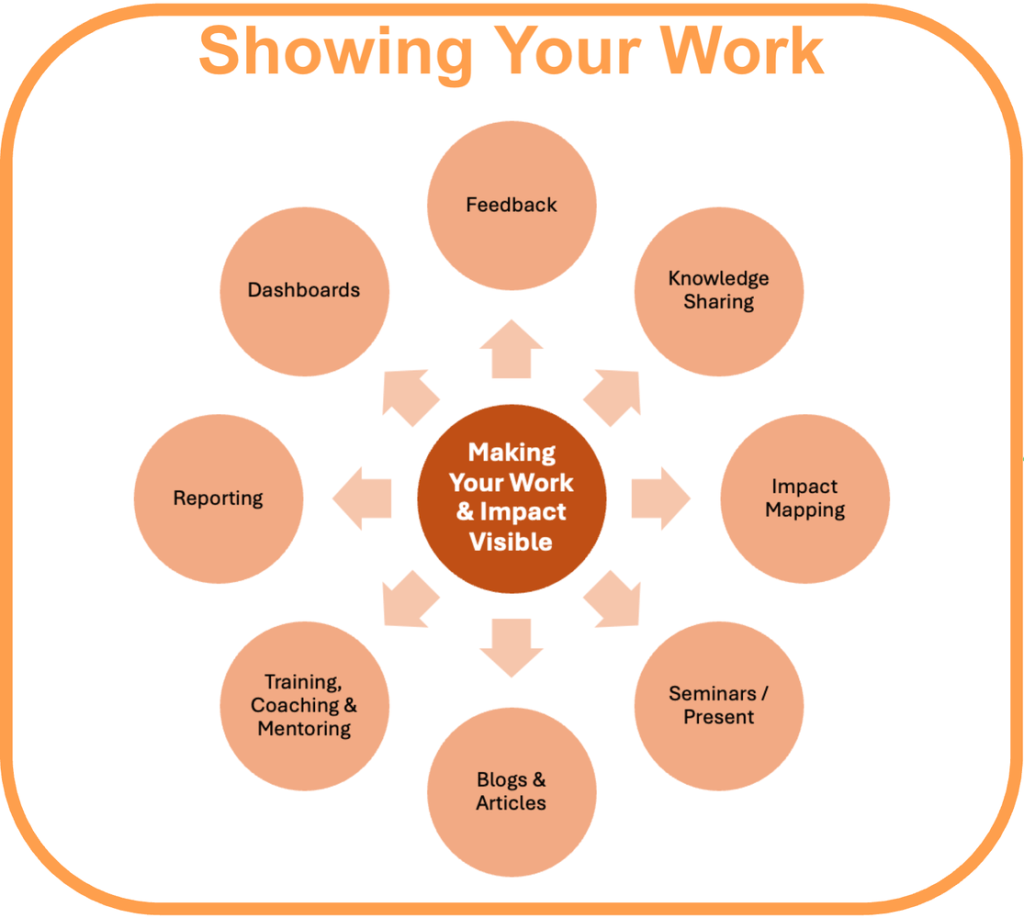
Have you ever noticed that teams who show their work clearly, and information from the team is flowing openly, they often are given more praise and autonomy from senior leaders. Thats because transparency boosts credibility and gravitas. If the impact you’ve made remains unseen, it becomes difficult for others to engage with your ideas with confidence. From a team performance perspective, transparency helps the team coordinate without friction, and deters “shadow work” and misaligned priorities. High performing teams operate transparently to help build trust.

Guiding Policies
Injecting some guiding policies (some approaches or frameworks that guides decision-making), help to create a level of coherence under pressure. Everyone craves autonomy, and enabling autonomy at a lower level, guided by higher level alignment through consistent guiding policies helps to drive high performance. Policies define how trade-offs are made, so teams don’t stall waiting for case-by-case approvals. This consistency reduces decision fatigue and quality variance.
Gravitas
A team that has grown their credibility, who are calm under pressure, are given more freedom to carry bigger decisions and handle tough calls. Gravitas stabilises the room, especially during ambiguity, enabling the team to keep moving without performative urgency or panic.


Support
Teams that trust each other are more supportive with each other when an ask for help is raised. Having reliable backing from team mates across topics like: resources, coaching, and psychological cover – it allows people to take intelligent risks. Knowing the team has your back increases your ability to use your initiative and reduces fear-based conservatism. “Support” is an important aspect of high performing teams.
Communication
Communication is key for any individual or team, in any organisation. It’s often called a “soft skill”, but it can actially be very hard at times. Crisp, bidirectional communication sustains alignment, and it turns intent into shared understanding, shortens feedback loops, and prevents rework. Communication (not just the words you use, but the format and structure in how you communicate) is essential in the context of high performing teams.

Read More
For information about the “Cycle of Trust” model, detailing how to build trust through proficiency, impact, and transparency, read the article below:
Purpose
High performing teams don’t see goals and objectives are the purpose – they’re a means to an end for the actual purpose of the team – to make an impact on people! Purpose also deeply relates to intrinsic motivation and drive. Understanding your impact, and therefore gaining a sense of purpose, focuses attention, powers motivation, and sets the criteria for good decisions. Without purpose, teams drift into busyness, but if they understand their purpose then they compound impact, which epitomises high performance.
Drive
Purpose translates into momentum when goals and objectives are challenging, meaningful, and time-bound. Drive sustains that effort and impact, and makes trade-offs manageable or even makes them feel worthwhile. Drive also has a boosting effect on throughput even when complexity rises.


Alignment
High performance thrives from teams operating with alignment. Not just amongst themselves as individuals, but also in terms of aligned strategies and tactics, with aligned product, tech and commercial roadmaps, and with convergence in their daily work. Alignment in these things brings reduced context switching and less contradictory priorities. Alignment optimises lead times and ultimately drives high performance.
Impact
Measuring and amplifying the impact you make on people is something that doesn’t seem to come natural to some people, but doing so drives home that feeling of purpose. Visualising your impact creates a feedback loop between completing the objectives and the real effects that doing so has on people. And measuring that real-world change not only gives that sense of purpose, it also sharpens focus, motivates craftsmanship, drives performance, and discourages vanity metrics. Focusing on impact and growth, instead of tasks and check-boxes, is far more human and meaningful for teams.


Mission
Most teams operate with a mission or vision statement. But how frequently do they update it to reflect changes in their context? And how narrow does it focus on a product feature instead of an actual purpose for the team? Having a concise, memorable narrative that is aligned on an impactful purpose for the team gives a north star for prioritisation and decision making. These are key things that high performing teams tackle with ease – because they have clear, aligned missions.
Safety
Psychological safety is the license that high performing teams have to learn, contribute, and challenge without fear of consequence. Safety accelerates innovation, increases openness with reporting errors or problems, and improves the ability to experiment and in turn the quality of decisions. Teams that feel safe debate more openly and productively, and they fix problems more efficiently, which boosts performance and reliability. Industry research on team effectiveness and performance proves that psychological safety is a core aspect of high-performing teams. There are 4 different categories for safety too:
Inclusion Safety
This is safety in relation to how welcomed and valued people feel. A team with inclusion safety has wider participations of the topics they discuss. They have much more diversity in their ideas, and have reduced social loafing, because in high performing teams, everyone is made to feel like their presence matters.


Learner Safety
Learner safety relates to two aspects of safety: the feeling of being able to openly ask questions, and the ability to learn from mistakes. When teams have the ability to experiment, make (and admit) small mistakes, and ask for help without fear of repercussions, then this level of learning truly sets the tone for growth and higher quality outcomes. Mistakes are treated as data. Teams explore, instrument, and iterate without blame, increasing discovery and recovery speeds and reducing costly problems. “Failing fast” is a common term across the industry, but this should be rebranded to “learning fast”, with safety at heart.
Contributor Safety
Individuals within a team can contribute more effectively if they have confidence that it’s safe for them to speak up and share their ideas. And the more ideas that are shared within the team, the better the outcome for the team in terms of decisions. Having a clear understanding of the team’s roles, responsibilities and remit, plus a code of conduct or principles to guide respectful conversations, help to raise confidence that it’s safe, which improve engagement and execution which in turn grows high performing teams.


Challenger Safety
Challenger safety is that feeling of it being safe to raise awareness of unknowns, question assumptions and propose changes. We’ve all felt scenarios where raising your hand at the end of a talk to ask a question, or adding a comment to a document to challenge an assumption has felt scary. High performing teams work hard to breed the safety into the team, so people can challenge and help raise the bar and strengthen strategic choices, prevent groupthink, and surface risks before they become problems.
Ownership
Ownership transforms agency into tangible outcomes. It binds accountability, principles, and decision rights, enabling teams to act quickly, learn rapidly, and course‑correct without chaos. Cultures of high ownership reduce handoff failures and generate more durable results. When teams take full ownership of products – including the operational systems running in production with real users – they elevate their diligence, working proactively to prevent issues and sustain reliability in production environments. Ownership is key for high performing teams.
Decision Making
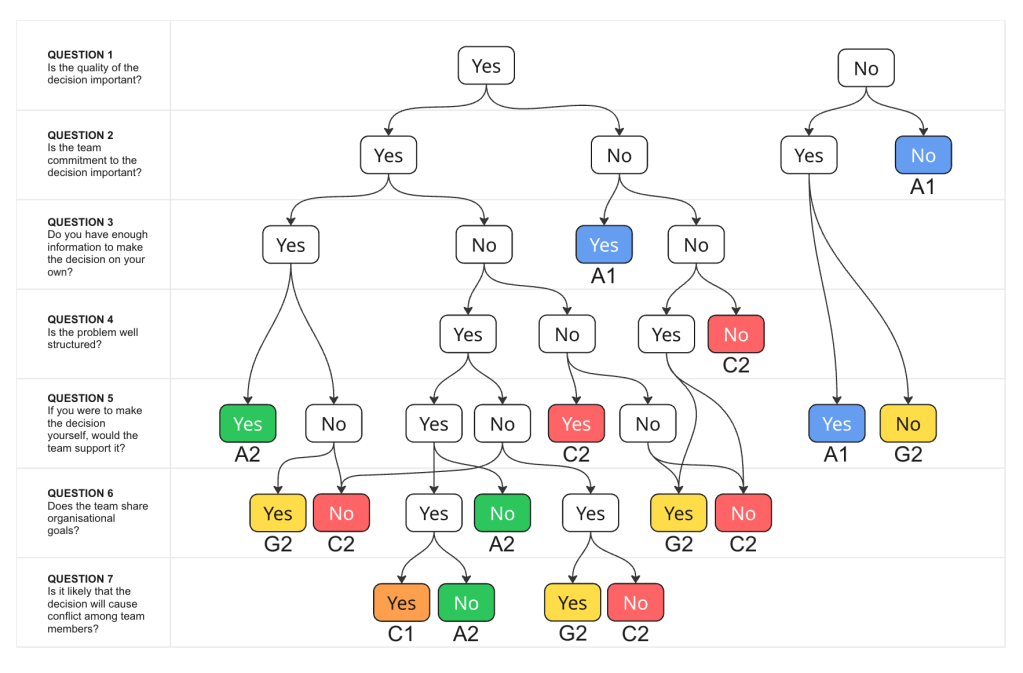
Clear decision-making frameworks help enable teams to own their own decisions and eliminate analysis-paralysis. Delegation of decisions to the team (while offering the safety net of an escalation path) helps to sharpen speed and accountability for the team. Structured conditions and defined foundations – such as a compelling purpose, the right people, and strong organisational support – are proven catalysts for high performance and sound decision‑making

Agreement
Explicit agreements (on goals, interfaces, service levels, etc) reduce ambiguity. They improve coordination across teams and make dependencies reliable. By clarifying expectations up front, they create a shared contract of accountability. In high‑ownership cultures, these agreements become the backbone of performance, enabling teams to deliver with confidence and prevent the drift that erodes trust and results.
Influence
The ability to shape priorities and design increases engagement. Influence channels expertise into decisions, reducing rework caused by top‑down challenges. When individuals see their input influenced into outcomes, they take greater ownership of results, holding themselves accountable for both quality and speed. In high‑performance cultures, influence is the mechanism that turns expertise into collective responsibility and sustained excellence.


Alignment
Ownership without alignment creates local-optimisations. With alignment, teams make coherent trade-offs across functions, improving end-to-end performance. Alignment ensures that individual ownership contributes to collective goals, turning isolated diligence into system‑wide impact. In high‑performance cultures, this balance prevents siloed success and channels accountability toward outcomes that matter across the global-optimisation for the organisation.
Principles
Shared, lived principles and values help to create consistent behaviours in line with the desired ethics of the team collectively. Principles play a part from many angles, like in reducing policy sprawl and guide judgment when rules run out, keeping quality high in times of innovation and novelty, and setting the tone on how the team communicates and collaborates. Having clear guiding principles acts as a set of pillars that every high performing team has.


Accountability
For high performing teams, clear commitments and measurable outcomes help to prevent drift. Having accountability of these commitments raises standards and shortens the time between signal and response. When paired with ownership, accountability shifts from external enforcement to internal drive, enabling teams meet expectations and take responsibility for outcomes as their own. This mindset accelerates learning, strengthens trust, and sustains high performance across the organisation.
Growth
Growth is one of the biggest levers when it comes to team morale and performance. It compounds capability, nurtures morale, and keeps the team adaptive in periods of changing contexts. All too often, companies employ a growth framework that is task-based and checkbox-driven, which causes people conversations about growth to happen in line with Destabilised Triangulation (i.e. comparing people against peers). High performing teams shift the focus for growth onto impact. High performing teams
treat growth as an extension of ownership – developing skills and judgment that expand their ability to deliver outcomes and make an impact. In doing so, they build resilience, elevate standards, and create a culture where progress is measured by contribution and lasting results.
Opportunity
In order to grow, high performing teams needs to have opportunities to make an impact, opportunities to develop their skills and competencies, and opportunities to stretch and shape the future. Having a level of autonomy blended with guidance and support from leadership drives engagement and also joy, because it signals trust and investment in them growing and evolving.


Learning Mechanisms
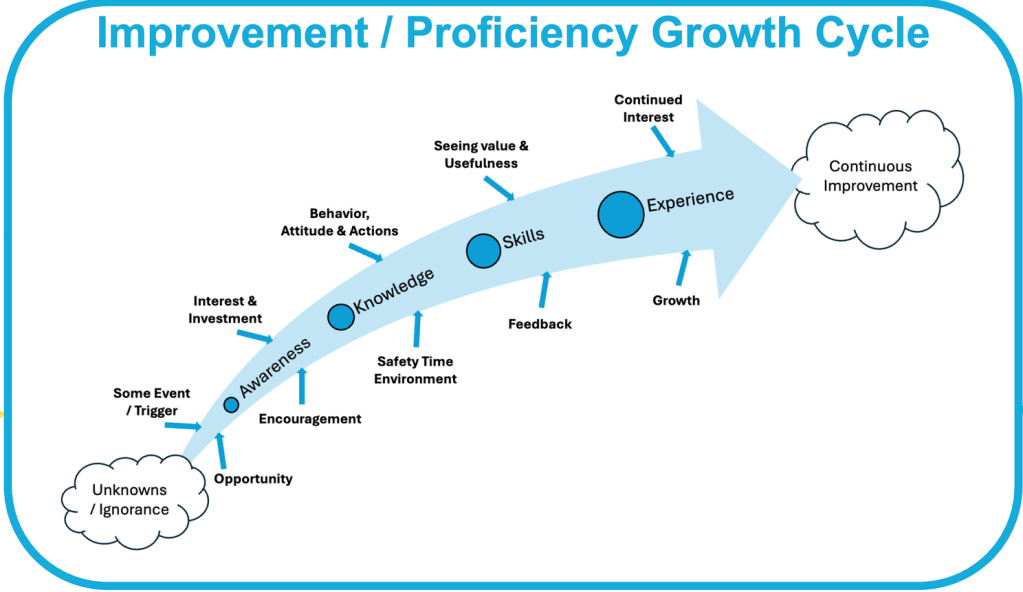
From workshops to books, structured learning mechanisms enable us to convert unawareness into knowledge, then into experience into ultimately into capability. This epitomises the ability to navigate towards high performance. Organisational support is essential for these learning mechanisms through time commitments and community spaces, which are well-established accelerators for growth and for sustaining performance.
Mastery
In line with the learning mechanisms, that journey from unawareness through to capability ultimately leads to mastery. Deliberate practice leads to new heights and depths in skills, which when utilised in a work context, really raise performance to new levels. Mastery lowers variability in complex work, and as detailed in the “cycle of trust” model, is a key contributor in unlocking trust and autonomy.
Impact Mapping
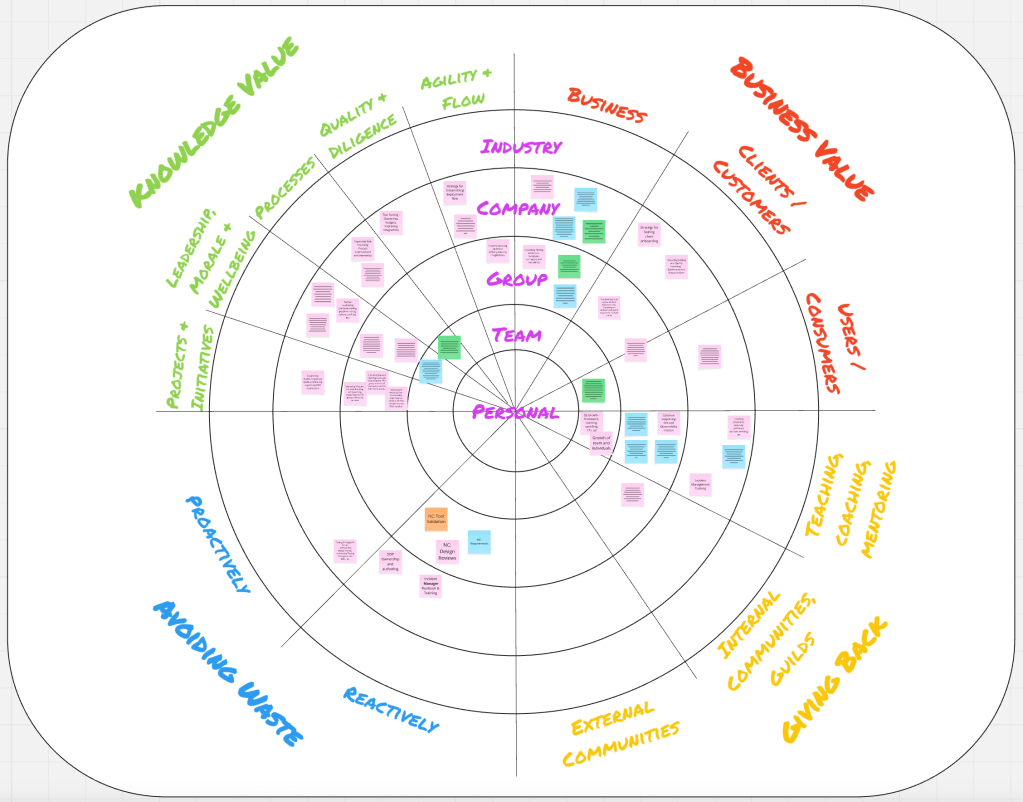
Impact mapping helps to visualise and track the effects of growth investments in relation to the objectives and outcomes achieved from utilising the skills being mastered. This activity is deeply connected to intrinsic motivation and the sense of purpose mentioned above, but can also be viewed from a proactive, strategic perspective to give focus and alignment on priorities and goals, meaning the most impactful, relevant work is what the team members focus on as the priority.
Feedback
Specific, actionable feedback accelerates growth by tightening learning loops. It raises quality, prevents repeated mistakes, and helps people calibrate faster, turning every cycle of feedback into a lever for capability and confidence. When feedback is consistent and meaningful, it builds trust because the support is real. In high‑performance cultures, that trust amplifies impact, because individuals feel safe to stretch, adapt, and deliver results that endure.

Rewards
Fair, timely recognition rewards reinforce desired behaviours. Rewarding impact (not just completed tasks) aligns incentives with outcomes and sustains momentum. In high‑performing teams, rewards signal that growth is valued not only in skills but in the ability to create meaningful results. Recognition tied to impact strengthens accountability, motivating individuals (and the team as a whole) to stretch further and invest in their own development. Over time, this creates a virtuous cycle: growth fuels greater impact, impact earns authentic rewards, and rewards reinforce the culture of ownership that keeps performance high and sustainable. Note: for high performance teams, rewards are more than pay rises and promotions.
Conclusions
The compounding effect: Joy sustains energy; trust accelerates decisions; purpose focuses effort; safety unlocks candour; ownership drives execution; growth keeps the engine improving.
The designable conditions: Launch and grow teams with a clear purpose, the right mindset, and supportive structures, then reinforce safety and ownership through transparent policies and decision rights.
The performance outcomes: Expect faster cycle times, higher quality, better risk management, and improved retention – because the team delivers and perhaps more importantly, learns how to deliver better over time.
Interested in building high performing teams? Contact us today!
Join our subscribers
Stay in the loop with new articles, videos, and frameworks.
 Evolving Leadership